Napa Valley AVAs & Sub-Appellations: A Visitor's Map
Napa is one valley made of many small places. Learn its nested appellations and a wine's whole character starts to make sense before you taste it.
Short answer
Napa Valley was established as an AVA in 1981, California's first, and now holds 16 nested sub-appellations, 17 counting the newest, Crystal Springs of Napa Valley. Cabernet Sauvignon dominates at 54 percent of planted acreage, and the 1976 Judgment of Paris put the region on the world map. Valley-floor AVAs like Oakville and Rutherford grow the celebrated Cabernet; the mountains give darker, tannic reds.
Two miles can change everything a wine tastes like in Napa. A Cabernet grown on the warm Oakville benchland and one from a cool ridge up on Mount Veeder come from vineyards you could see from the same spot, yet they pour like different grapes. That is what the valley's appellation map is really recording: not marketing lines, but the soils, elevations and pockets of climate that shape the glass. Learn the map, and a Napa tasting stops being a list of names and starts being a place you can read.
Napa Valley became an American Viticultural Area in 1981, California's very first, and inside that big boundary sit a set of smaller, nested appellations, each with its own character. This is the visitor's version of that map: what the sub-AVAs are, why Cabernet rules so much of it, how the 1976 Judgment of Paris set the whole thing in motion, and how a wine tour actually routes through it all in a day.
What is a Napa Valley AVA, and why does it matter?
An AVA, or American Viticultural Area, is a legally defined grape-growing region whose boundaries are drawn by geography and climate. Napa Valley was established as an AVA in 1981, codified at 27 CFR 9.23, making it California's first and the second in the United States. The label matters because place, more than any other single factor, decides how a Napa wine looks, smells and ages.
The Napa Valley AVA is the umbrella. When a bottle says "Napa Valley," at least 85 percent of the grapes come from within that boundary, which stretches from San Pablo Bay in the south to Calistoga in the north and up into the mountains on both sides. The federal rule that defines it took effect in early 1981, and the designation is why "Napa Valley" on a label carries the weight it does. Inside that umbrella, the nested sub-appellations get more specific about exactly where a wine was grown.
For a visitor, the practical payoff is simple. Knowing an estate sits in Stags Leap District versus Howell Mountain tells you, before the first pour, roughly what to expect in the glass. Below is the format most people use to actually get between these appellations without driving, since the estates sit miles apart along the valley's two arteries.
How many sub-AVAs does Napa Valley have?
Napa Valley holds 16 nested sub-appellations, 17 counting the newest, Crystal Springs of Napa Valley, approved in 2024. The list runs from valley-floor districts like Oakville, Rutherford, St. Helena, Yountville and Oak Knoll to mountain appellations like Howell Mountain, Mount Veeder, Spring Mountain and Atlas Peak, plus the cool southern reaches of Los Carneros and Coombsville.
The count is worth stating carefully, because even the official sources phrase it two ways: the body text at the Napa Valley Vintners fast-facts page says 17 approved sub-appellations while an older graphic on the same page still reads 16, since Crystal Springs is so new. Either way, the point for a visitor is the variety inside a small valley. Each appellation is a distinct pocket of soil and climate, and the wines follow.
| Sub-AVA | Floor or mountain | Signature style |
|---|---|---|
| Oakville | Valley floor | Powerful, structured Cabernet |
| Rutherford | Valley floor | Cabernet with "Rutherford dust" grip |
| Stags Leap District | Valley floor bench | Silky, perfumed Cabernet |
| St. Helena | Valley floor | Rich, ripe Cabernet |
| Yountville | Valley floor | Balanced reds, some sparkling |
| Oak Knoll District | Southern floor | Cooler-climate reds and whites |
| Los Carneros | Southern, cool | Chardonnay, Pinot Noir, sparkling |
| Coombsville | Southeast, cool | Elegant, fresher Cabernet |
| Howell Mountain | Mountain, east | Dark, tannic, age-worthy reds |
| Mount Veeder | Mountain, west | Structured, wild-edged reds |
| Spring Mountain District | Mountain, west | Concentrated hillside reds |
| Diamond Mountain District | Mountain, north | Firm, mineral Cabernet |
| Atlas Peak | Mountain, east | High-elevation, bright reds |
| Calistoga | Northern floor | Warm-climate, bold reds |
| Chiles Valley | Eastern upland | Cooler, old-vine Zinfandel |
| Wild Horse Valley | Southeast edge | Cool, breezy, small-production |
That is the sixteen named districts. Add Crystal Springs of Napa Valley and you reach seventeen. For which specific estates sit in each of these, the best Napa wineries to visit by AVA and style matches names to the map.
What is the difference between valley-floor and mountain AVAs?
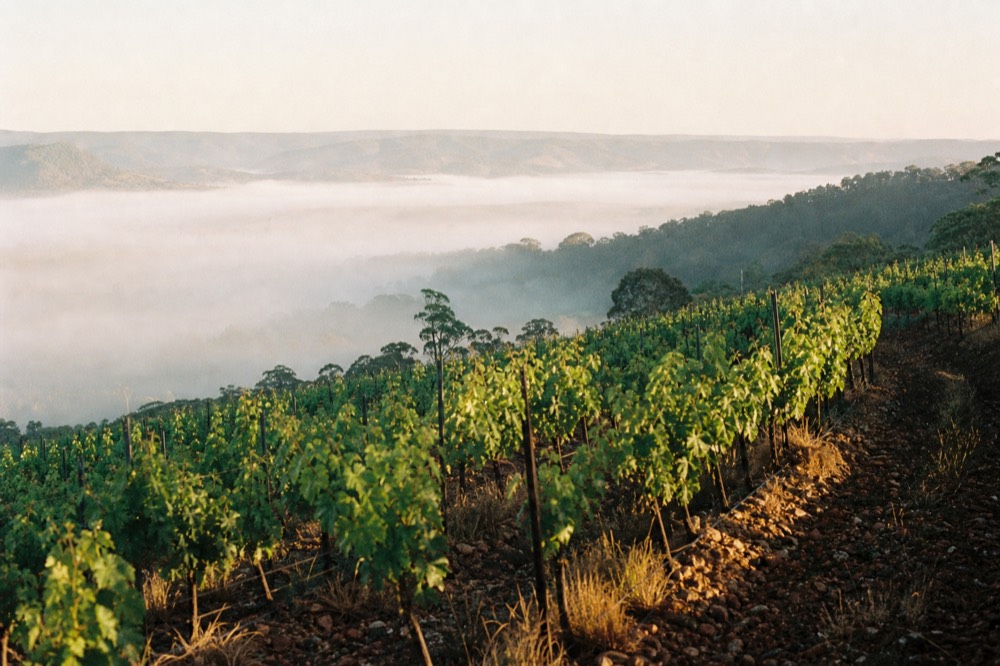
Valley-floor AVAs grow on deep, fertile, often gravelly soils in a warmer, more even climate, giving rounder, more approachable wines, the classic Napa Cabernet profile. Mountain AVAs sit above the fog line on thin, rocky soils with big day-to-night swings, producing smaller berries and darker, more tannic, longer-aging reds. Same valley, two very different glasses.
This split is the most useful thing a visitor can carry, because it predicts the wine before the label does. On the floor, in Oakville, Rutherford and St. Helena, the soils and steady warmth build the plush, fruit-forward Cabernet most people picture when they think of Napa. Up on Howell Mountain, Mount Veeder or Spring Mountain, vines struggle on rocky ground and the wines come out more structured, more mineral, and built to age for a decade or more.
Fog is the quiet third factor. Cool marine air pushes up from San Pablo Bay at the valley's southern end most mornings, then burns off through the day, and how much of it reaches a given vineyard shapes the wine. The southern appellations sit in that fog for longer and stay cooler, which is why they grow whites and sparkling well. The mountain vineyards rise above the fog line into clear morning sun, so they ripen differently again. Same 30-mile valley, three distinct climates stacked by geography.
| Factor | Valley-floor AVAs | Mountain AVAs |
|---|---|---|
| Soils | Deep, gravelly, fertile | Thin, rocky, well-drained |
| Climate | Warmer, more even, fog influence | Above the fog, big day-night swings |
| Wine style | Rounder, plush, fruit-forward | Darker, tannic, structured |
| Ageing | Approachable earlier | Built for the long haul |
| Examples | Oakville, Rutherford, St. Helena | Howell Mountain, Mount Veeder |
A well-planned day often pairs one of each, so you taste the contrast directly. A private tour is the format that lets you build exactly that itinerary, because you choose the estates and the driver handles the mountain roads.
The Private SUV Wine Tour, rated 4.9 across 260 reviews, prices by the group rather than the head and shapes the day around your chosen appellations, with door-to-door pickup and a dedicated driver. It is the way to pair a floor estate with a hillside one without anyone worrying about the winding drive between them.
Which AVAs are best known for Cabernet Sauvignon?
The Oakville-to-Rutherford stretch of the valley floor is Napa's Cabernet heartland, home to many of its most collectible bottles. Stags Leap District, just south, is famous for a silkier, more aromatic Cabernet. St. Helena and Calistoga add riper, warm-climate versions. Cabernet Sauvignon dominates the whole valley, at 54 percent of planted acreage, so most appellations grow it well.
Cabernet is Napa's identity by a wide margin. The official variety breakdown puts it at 54 percent of all vines, roughly 25,000 acres, with Chardonnay a distant second at 12 percent. That is why a visitor mostly tastes red here, and why the celebrated appellations are the ones that ripen Cabernet best. The style shifts as you move up the valley and up the hillsides, but the grape stays constant.
| Variety | Share of acreage | Where it shines |
|---|---|---|
| Cabernet Sauvignon | 54% | Oakville, Rutherford, Stags Leap, St. Helena |
| Chardonnay | 12% | Los Carneros, Oak Knoll |
| Merlot | 8% | Valley floor blends |
| Sauvignon Blanc | 6% | Cooler southern sites |
| Pinot Noir | 5% | Los Carneros |
| Zinfandel | 3% | Chiles Valley, older sites |
The takeaway for a tasting itinerary: if Cabernet is the goal, keep to the central floor and Stags Leap, and treat the whites and Pinot as a cool-climate detour to the south. For the standout Cabernet estates specifically, which Napa wineries are best for Cabernet names them.
What is Napa's newest sub-appellation?
Crystal Springs of Napa Valley is the newest, approved by federal regulators in 2024. It is an all-hillside appellation of roughly 4,000 acres, sitting at elevations of about 400 to 1,400 feet between St. Helena, Calistoga and Howell Mountain. As a mountain-style district, it is known for structured, age-worthy reds, and its arrival is why Napa's sub-AVA count is now often given as 17.
New appellations are rare, so Crystal Springs is a genuine update to the map. It carves out a band of hillside vineyards that had long been grouped loosely with their neighbors, formally recognizing that the elevation and rocky soils there make a distinct kind of wine. Wine media covered the approval closely, and Decanter's report on the new AVA laid out its boundaries and character.
| Crystal Springs fact | Detail |
|---|---|
| Status | Napa's newest sub-AVA, approved 2024 |
| Size | About 4,000 acres |
| Elevation | Roughly 400 to 1,400 feet |
| Location | Between St. Helena, Calistoga and Howell Mountain |
| Style | Hillside, structured, age-worthy reds |
For a visitor, Crystal Springs is a reminder that Napa's map is still being drawn. The valley keeps refining how it describes itself, which is part of why understanding the appellations pays off.
How did Napa build its appellation system?
Napa's appellation map was drawn over four decades. The overarching Napa Valley AVA came first, in 1981, right after the region shocked the wine world in 1976. Growers then petitioned for smaller, nested districts as they proved that place changed the wine, and the map has kept filling in ever since, most recently with Crystal Springs of Napa Valley in 2024. Each new AVA is a formal argument that a corner of the valley tastes distinct.
The system did not arrive all at once, and that history explains its shape. Once Napa earned a global reputation, protecting and defining it mattered, so the 1981 AVA drew the outer boundary and gave "Napa Valley" a legal meaning. From there the map filled in from the ground up. Growers in a distinct pocket of soil and climate would gather evidence and petition federal regulators for their own nested appellation, arguing that a mountain vineyard above the fog, or a cool site near the bay, produces a wine the neighboring districts cannot.
That bottom-up process is why the count keeps changing and why even official sources phrase it carefully. Crystal Springs is simply the latest district to prove its case. The appellation map is a living document, updated as growers and regulators recognize new pockets worth naming, which is what makes learning it rewarding rather than academic. For a tasting itinerary, it also means the labels are doing real work: a district name is a genuine promise about soil, elevation and climate, not a marketing flourish.
What was the 1976 Judgment of Paris, and why does it matter here?
The Judgment of Paris was a blind tasting held in Paris on May 24, 1976, in which French judges rated California wines above famous French bottles. A 1973 Stag's Leap Wine Cellars Cabernet topped the reds and a 1973 Chateau Montelena Chardonnay topped the whites. The result shattered the assumption that only France made world-class wine and put Napa on the global map overnight.
Before 1976, Napa was a promising region taken seriously by few outside California. After it, the valley was a rival to Bordeaux and Burgundy. The two winning wines came from vineyards inside what are now the Stags Leap District and Calistoga areas of the appellation map, which is part of why those places carry such weight today. Both winning bottles are now held by the Smithsonian, and the story is retold at nearly every tasting bar in the valley.
| 1976 Judgment of Paris | Winning wine |
|---|---|
| Top red | 1973 Stag's Leap Wine Cellars Cabernet Sauvignon |
| Top white | 1973 Chateau Montelena Chardonnay |
| Date | May 24, 1976 |
| Legacy | Napa recognized as world-class; bottles held by the Smithsonian |
The appellation system that Napa built in the years after, starting with the 1981 AVA, is partly a response to that moment: a way to protect and define a region the world suddenly cared about.
How do wine tours route through the AVAs?
Most day tours run a stretch of the valley floor rather than the whole valley, clustering three or four wineries by town so the driving stays short. A typical route works up Highway 29 through Yountville, Oakville and Rutherford, with the Silverado Trail as the return leg. Mountain appellations take longer to reach, so they usually feature on private, custom days rather than shared tours.
Geography drives the itinerary. The valley floor is only about 30 miles long and 5 miles wide, and its estates line Highway 29 and the parallel Silverado Trail, so a smart route works up one road and back the other. Shared small-group and trolley tours stick to floor appellations that seat groups and sit close together. Reaching a Howell Mountain or Mount Veeder estate means winding hillside roads and more time between stops, which is why the mountains are usually a private-tour choice.
The appellation you pick also sets the mood of the day, not just the wine. A Yountville-to-Rutherford floor loop keeps drive times to 15 or 20 minutes and leaves room to linger over lunch. A northern day toward Calistoga trades some of that ease for spectacle and warmer, bolder reds. A floor-plus-mountain itinerary is the most educational but the most driving. Matching the route to how much time you want in the car, rather than trying to touch every district, is the single best planning decision.
| Route type | AVAs covered | Best format |
|---|---|---|
| Classic floor loop | Yountville, Oakville, Rutherford | Small-group or trolley |
| Northern spectacle | Calistoga, castle country | Castle trolley |
| Floor-plus-mountain contrast | One floor AVA plus a hillside estate | Private custom day |
| Cool-climate detour | Los Carneros, Coombsville | Private day |
The trolley routes are a fun way to cover a floor cluster with the sightseeing built in, and the castle version reaches the northern end of the valley.
The Napa Valley Wine Trolley Castle Tour, rated 4.3 across 309 reviews, runs an open-air trolley from Yountville up to Castello di Amorosa plus two more premium estates with a family-style lunch, and it is twenty-one-and-over. It is a relaxed way to reach the northern appellations without driving the hillside roads yourself, with the current fare on the live listing.
Which AVA should you visit first?
For a first Napa visit, start on the valley floor in Oakville or Rutherford, the heart of the region's Cabernet, then add a contrast: a silkier Stags Leap District estate, or a cool-climate Los Carneros stop for whites and sparkling. Save the mountain appellations for a return trip or a private day, since they take longer to reach and pour a more demanding style.
The floor is the right introduction because it delivers the classic Napa profile everyone comes for, and its wineries are the easiest to reach and book. Once that baseline is set, contrast teaches the most: a floor Cabernet next to a mountain one, or a big red next to a crisp Carneros white, and the appellation map suddenly makes sense in the glass. When you book Napa Valley Wine Tours for the day, a guide can sequence exactly that kind of contrast for you.
The Napa Valley Small-Group Winery Tour carries a 4.9 rating across more than 1,000 reviews and starts around $151 per person, with a local guide driving to three family estates and seated tastings booked ahead. For a first Napa visit, that is the easy way to taste a couple of floor appellations well without spending the day mapping routes and holding reservations yourself.
For where the seasons and crowds land across all of this, the best time to visit Napa Valley covers the calendar, and how Napa compares with neighboring Sonoma is worth a read if you are weighing both regions.

Whichever appellations you choose, the three formats below cover the ways to taste them without driving the valley yourself.