The Napa Valley Wine Train: Tickets, Cost & What to Expect
A three-hour lunch on restored rail cars, a 36-mile round trip up the valley, and a price that climbs fast by tier. Here is what a Napa Valley Wine Train ticket actually buys.
Short answer
The Napa Valley Wine Train runs a 36-mile round trip from McKinstry Street Station in Napa to St. Helena and back, year-round. A Gourmet Express lunch starts around $278 for roughly three hours with a multi-course meal, a welcome glass of sparkling, and vineyard views; Vista Dome and the multi-stop Legacy Experience cost more. Wine tastings beyond the welcome pour are usually extra.
Lunch on the Napa Valley Wine Train starts around $278 a head, runs about three hours, and never once asks you to drive. That single fact explains most of its appeal and most of its criticism at the same time. You board restored rail cars at a station in downtown Napa, roll north through the vines to St. Helena and back, and eat a multi-course meal while the valley slides past the window. What you do not get, unless you pay up a tier, is a stack of full winery tastings. The train is a dining experience on rails first, a wine experience second.
That distinction is the whole story, so this guide sorts it out in plain terms: where the train goes, what the tiers cost, what lands on your plate and in your glass, how long you are aboard, whether it still runs (it does), and when a winery tour is the better spend for the same money.
What is the Napa Valley Wine Train, and where does it go?
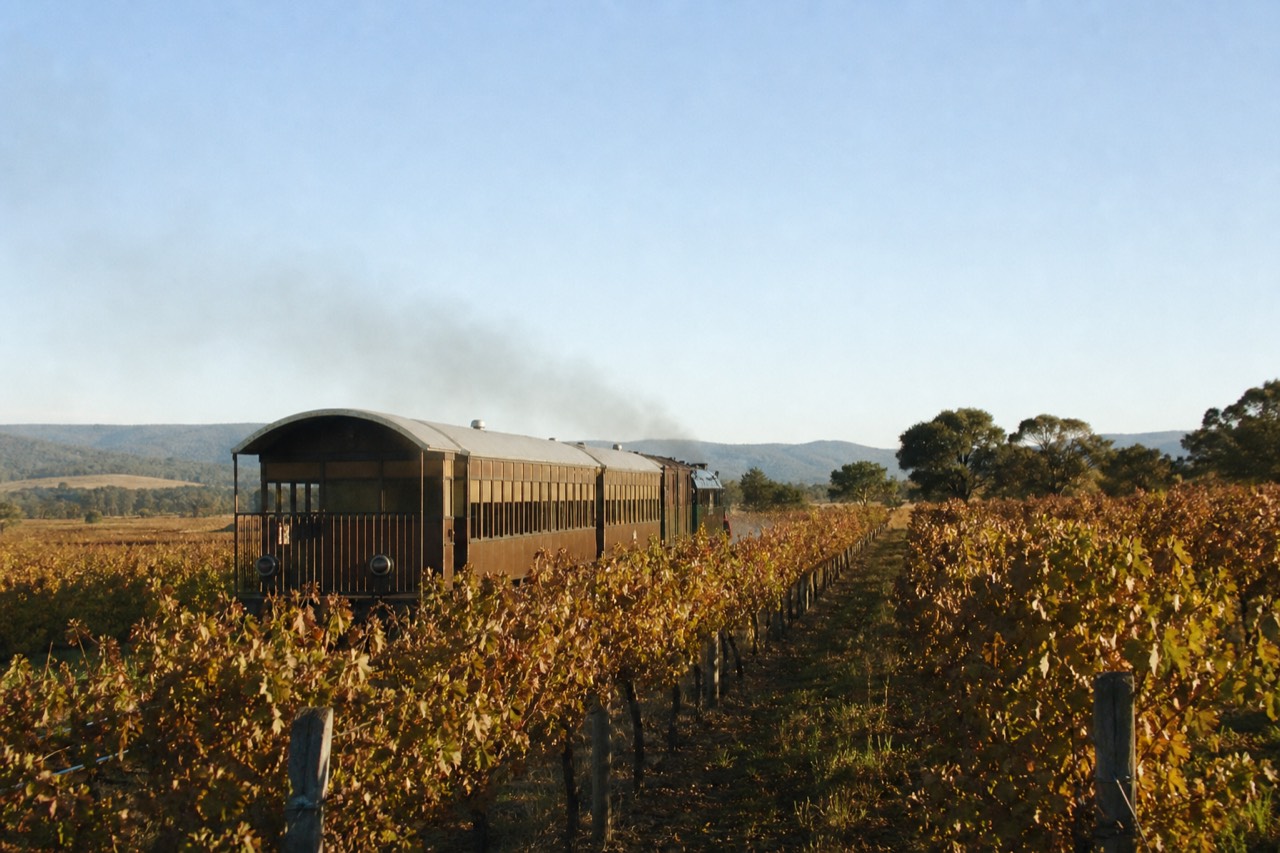
The Napa Valley Wine Train is a dining train that departs McKinstry Street Station at 1275 McKinstry Street in downtown Napa and runs a 36-mile round trip north to St. Helena and back. You stay aboard the whole loop, eating a multi-course meal on restored vintage rail cars as the train rolls past vineyards through Oakville and Rutherford. It has operated for decades and runs year-round.
The route is short and scenic by design. From Napa the tracks head up-valley roughly 18 miles to St. Helena, then return the same way, so the full journey covers about 36 miles without you ever changing seats. Along the way the train passes the benchland vineyards that make this stretch of Highway 29 famous, the same up-valley towns a driving tour would thread through. The official Wine Train site keeps the current departure calendar and boarding details.
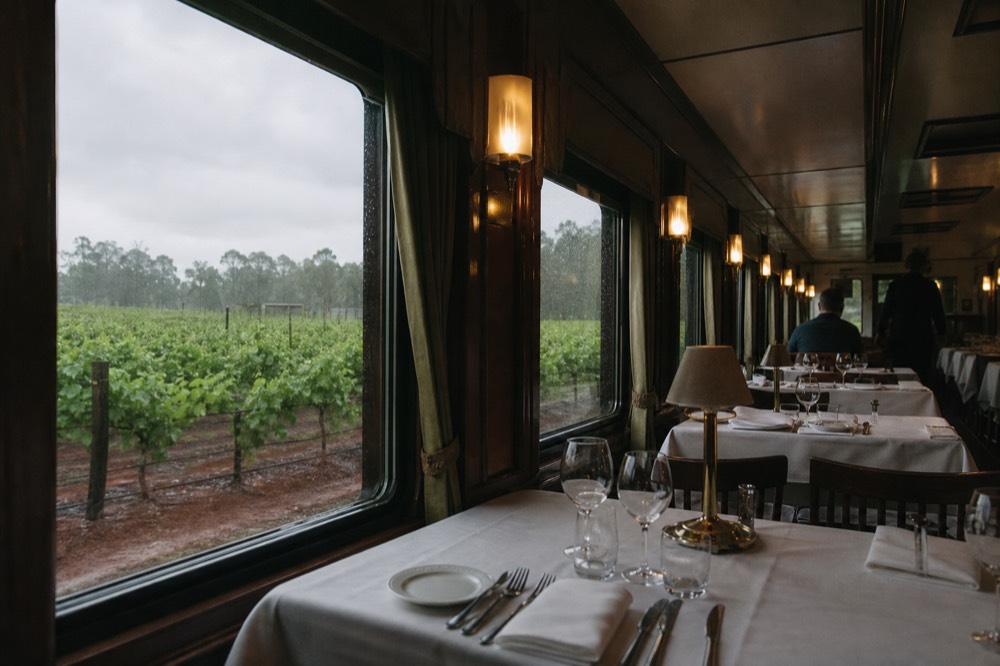
The cars themselves are the draw for a lot of riders. These are beautifully restored vintage carriages with white tablecloths, brass fittings, and big picture windows, and part of what you pay for is the sense of a slower, older way to see wine country. St. Helena, the turnaround point, sits about 18 miles up Highway 29 from the city of Napa, near the center of a valley floor that is only about 30 miles long. You are not covering vast distance. You are covering the prettiest part of it, unhurried.
| Along the route | Where it sits | Roughly |
|---|---|---|
| McKinstry Street Station, Napa | Downtown Napa, the departure | Mile 0 |
| Oakville and Rutherford vineyards | Mid-valley, northbound | Passed en route |
| St. Helena | The turnaround point | About 18 miles up-valley |
| Return to Napa | Southbound on the same tracks | 36-mile round trip total |
How much do Napa Wine Train tickets cost?
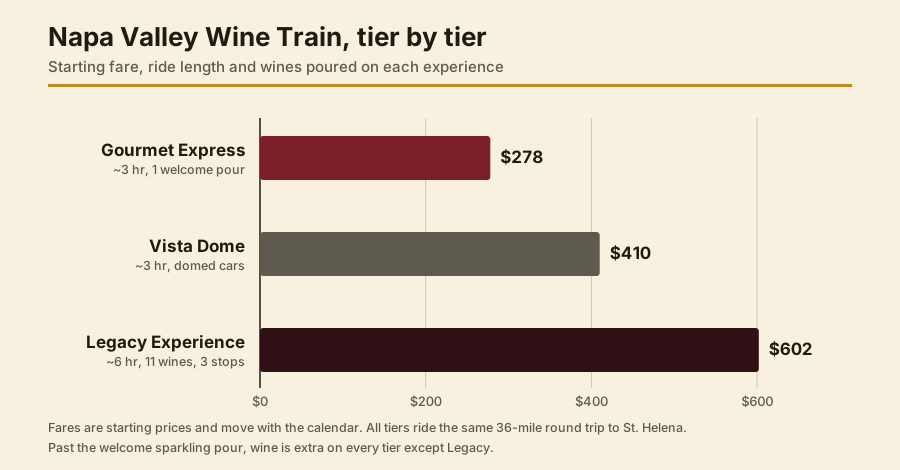
Napa Wine Train tickets are priced by tier and rise steeply. The entry Gourmet Express lunch or dinner starts around $278 per person for a multi-course meal and the ride. The domed Vista Dome cars start near $410. The all-day Legacy Experience, which adds winery stops off the train, runs from roughly $602. Prices shift by date and demand, so the live figure sits on the listing.
Three factors move the number: which car you sit in, whether you take lunch, dinner, or the full-day Legacy, and how busy the calendar is. The Gourmet Express is the baseline, and it is the one most first-time riders book. Step up to a Vista Dome glass-roofed car and the ticket jumps for the better view and a longer menu. The Legacy Experience is a different animal entirely, closer to a full touring day than a train ride, which is why it costs about double the entry lunch.
| Experience tier | From, per person | The meal | Wine included |
|---|---|---|---|
| Gourmet Express lunch or dinner | About $278 | Multi-course gourmet menu | Welcome glass of sparkling; more for purchase |
| Vista Dome (glass-roof car) | About $410 | Longer multi-course menu | Welcome pour; wine pairings vary |
| Legacy Experience (with winery stops) | About $602 | Four-course meal | Eleven wines across three tasting stops |
Those are starting figures, and they climb on peak weekends and holiday dates. Two riders on a basic lunch clear $550 before any add-on wine, so the train is a splurge, not a value play. What it removes in return is every logistical worry: no reservations to chase, no driver to nominate, no route to plan. Here are the three ways most people ride, plus a small-group winery tour for contrast, so you can weigh the train against the alternative before you commit.
What are the different Wine Train experiences and seatings?
The core choice is the Gourmet Express, the Vista Dome, and the Legacy Experience. Gourmet Express is the standard multi-course lunch or dinner in a classic dining car. Vista Dome puts you under a glass roof with a longer menu. Legacy is a six-hour day that leaves the train at Charles Krug and V. Sattui for real winery tastings, eleven wines in all, then adds open-air car dancing on the ride home.
Think of it as good, better, and all-in. Most visitors want the Gourmet Express: the meal, the views, the ride, done in an afternoon. The Vista Dome suits anyone who cares most about the panorama, since the domed glass roof turns the whole car into a window. The Legacy Experience is for people who want the train and proper winery visits in one ticket, and it is the only tier where you get a full tasting itinerary rather than a welcome pour and a wine list.
The Gourmet Express lunch is the anchor product and the one to start with if the choice feels overwhelming. It carries the train's identity in a single seating: white-linen tables, a multi-course kitchen menu, a glass of sparkling to open, and roughly three hours rolling to St. Helena and back.
That Gourmet Express lunch, rated 4.4 across more than 400 reviews and starting around $278, is the version this guide keeps coming back to because it is what most people mean when they say they rode the Wine Train. The higher tiers are worth the money only if the glass-roof view or a full winery day is specifically what you are after.
| Service | Typical boarding | Typical return | Time aboard | Distance |
|---|---|---|---|---|
| Gourmet Express lunch | 11:30 a.m. | 2:30 p.m. | About 3 hours | 36-mile round trip |
| Gourmet Express dinner | 6:20 p.m. | 8:50 p.m. | About 2.5 hours | 36-mile round trip |
| Legacy Experience | 10:15 a.m. | 4:14 to 4:30 p.m. | About 6 hours | 36 miles plus winery stops |
Times shift a little by season and by day, so treat them as the shape of each service rather than a fixed timetable. The pattern holds: lunch is the longest of the on-train-only rides, dinner is a touch shorter, and Legacy fills the better part of a day.
What food and drink is served on the Wine Train?
Every Wine Train ticket includes a multi-course gourmet meal cooked onboard and a welcome glass of sparkling wine. Most menus run three to four courses, with some seatings offering a longer tasting menu. Beyond that opening pour, wine is generally an added cost: you order by the glass or bottle, or buy a tasting flight. The Legacy tier is the exception, bundling eleven wines across three stops.
This is the point that trips up first-time riders. The train's name says wine, but on the standard Gourmet Express the food is what is included and the wine, past that first sparkling glass, is mostly extra. The kitchen is the star of the basic ticket. Expect a seasonal multi-course menu, attentive service, and the theater of a full meal prepared in a galley on a moving train.
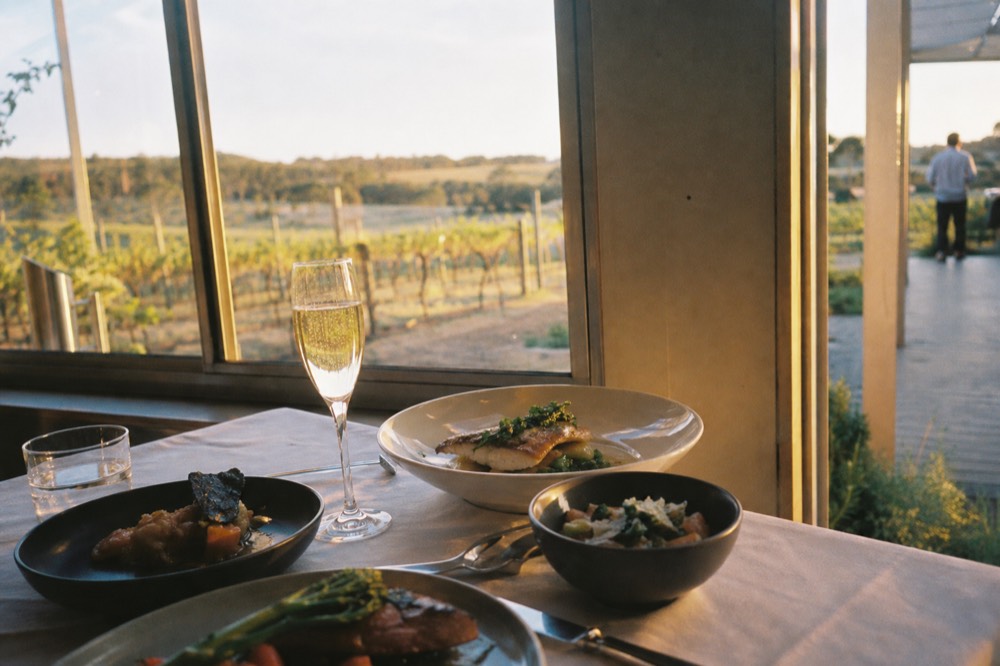
If tasting a lot of Napa wine is the goal, budget for the add-ons or choose the Legacy Experience, which pours eleven wines and stops at two working wineries, Charles Krug and V. Sattui. For a closer look at exactly which pours come with each fare, our companion piece on what drinks are included in the Wine Train cost breaks the inclusions down tier by tier. The short version: the meal is included, the deeper wine experience usually is not.
| What you get | Included on Gourmet Express | Extra to buy |
|---|---|---|
| Multi-course meal | Yes | Menu upgrades on some seatings |
| Welcome sparkling pour | Yes | Additional glasses |
| Wine tastings and flights | No | Yes, onboard purchase |
| Winery stops off the train | No (Legacy only) | Built into Legacy fare |
| Gratuity | Not always included | Check at booking |
How long is the Wine Train ride?
The Gourmet Express lunch runs about three hours, boarding near 11:30 a.m. and returning around 2:30 p.m. The dinner service is a little shorter at roughly two and a half hours. The all-day Legacy Experience lasts about six hours because it leaves the train for winery visits. All of them cover the same 36-mile round trip to St. Helena and back.
The ride is paced to the meal, not the mileage. Because the loop is only 36 miles, the train moves slowly and lingers, so the courses arrive over a relaxed stretch rather than a rushed one. Lunch is the sweet spot for most riders: long enough to feel like an occasion, short enough to leave the rest of the day open. Our detailed look at how long the Wine Train ride lasts maps every service against its clock if you are timing it around other plans.
The dinner service is the pick when you want the experience compressed into an evening, with sunset light on the vines and a shorter run home. It carries the same Gourmet Express format, meal-first with the wine mostly a la carte, in a two-and-a-half-hour window.
The Gourmet Express is the streamlined version of the ride, and its live starting price sits on the operator's listing since it moves with the calendar. Pick it when the meal and the views are the point and you would rather keep the outing to a single, tidy block of time.
Does the Napa Wine Train still run?
Yes. The Napa Valley Wine Train is operating year-round through 2025 and 2026 with no suspension. It runs daily Legacy Experiences plus regular lunch and dinner services on the main train, and adds seasonal journeys like the festive Santa Train around the holidays. Newer near-zero-emission locomotives came into service in mid-2026, cutting smoke on the route.
The question comes up a lot, partly because pandemic-era shutdowns paused so much of Napa tourism a few years ago, and partly because people simply are not sure a rail attraction has survived. It has, and it is actively investing: the switch to cleaner "green" locomotives is recent, and the events calendar keeps expanding. If you are still unsure about current status, our dedicated post on whether the Napa Wine Train still runs walks through the live schedule in detail.
Is the Napa Wine Train worth it?
For the right rider, yes. The Wine Train is worth it as a special-occasion meal with a view, for anyone who wants zero logistics, or for travelers who value the historic train itself. It is a weaker choice if your goal is tasting a lot of Napa wine, since the standard fare includes little beyond a welcome pour and costs more than a small-group winery tour that pours far more.
The honest split is about what you are buying. Riders who go in expecting a scenic restaurant on rails tend to love it: the food, the service, and the setting draw consistent praise. Riders who expected a wine tour often feel shortchanged, because the pours are limited and the bill is high. Neither reaction is wrong. They just wanted different things. Our full breakdown of whether the Napa Wine Train is worth it lays the pros and cons side by side if you are on the fence.
Wine Train or a winery tour: which should you choose?
Choose the Wine Train if the meal, the vintage cars, and a no-effort scenic ride are the point. Choose a small-group winery tour if you want to actually taste across several estates, visit working cellar doors, and stretch your dollar further. For similar money to a lunch on the train, a guided tour hands you three real tastings, a driver, and back-road wineries you would not find alone.
The two experiences barely overlap once you look closely. The train is a fixed loop with a meal and a view; the tour is a moving day across the valley floor with tastings at family estates. If you have already decided you want to drink well and see cellar doors, a guided day is the better fit, and it is exactly what Napa Valley Wine Tours is built around. The comparison below lines up the trade-offs.
| Factor | Napa Wine Train (lunch) | Small-group winery tour |
|---|---|---|
| Roughly | From about $278 pp | Around $151 pp |
| What you taste | Welcome pour, more to buy | Three seated tastings included |
| Wineries visited | None on the standard fare | Three family estates |
| The setting | Restored dining train, fixed loop | Back-road cellar doors |
| Driving and booking | Fully handled | Fully handled |
| Best for | A meal with a view, an occasion | Tasting across the valley |
The Napa Valley Small-Group Winery Tour, rated 4.9 across more than 1,000 reviews at around $151 per person, is the natural alternative for anyone who booked expecting wine rather than dinner. It folds in three tastings, a picnic lunch, and a local guide at the wheel. If your heart is set on the train, ride the train. If you were really after the wine, this is where the money goes further. For a wider view of your options, our guide to the best way to tour Napa Valley compares the train, the trolley, and guided tours.
What should you know before you board?
Reserve well ahead, especially for weekends and peak season, since the train books out. There is no strict dress code, but smart casual is encouraged and dinner runs a touch dressier. Alcohol service is 21 and over, and some experiences like Legacy are adults-only while others offer child rates. Budget for gratuity and any wine beyond the welcome pour on top of the ticket.
None of it is complicated, but a few surprises catch people. The fare is per person and the wine add-ons stack up quickly, so a "simple" lunch for two can drift well past $600 once you order a couple of bottles. Book early: the popular lunch seatings and holiday journeys fill days ahead in high season. And come hungry rather than thirsty, because the meal, not the wine, is what your basic ticket is really paying for.
| Budget line | Typical range | Notes |
|---|---|---|
| Base ticket (Gourmet Express) | From about $278 pp | Lunch or dinner, meal included |
| Extra wine, tastings, flights | $20 to $100+ pp | Ordered onboard, past the welcome pour |
| Gratuity | 18 to 20 percent | Confirm whether it is pre-added |
| Upgrade to Vista Dome or Legacy | +$130 to +$325 pp | Glass roof, or a full winery day |
With the tier chosen, a reservation held, and clear eyes about what the fare includes, the Wine Train delivers exactly what it promises: a slow, handsome, meal-led ride through the middle of wine country. Know what you are buying and it rarely disappoints. Expect a full tasting tour and it will. Pick the version that matches the day you actually want.